



FIELD BRIEF #004 / PUBLIC RECORD
Subject: The next collapse won’t start in the urban core
Prepared by: Daniel Edwards
Delivered to: Investors · Stewards · Civic Readers · Neighbors
Timestamp: 2026-01-22 | numbered into the record 2026-08-06
IMPOSSIBLE HOUSING MAY BE COMING TO A NEIGHBORHOOD NEAR YOU.
Blight 3.0 won’t arrive as headlines.
Blight 3.0 will arrive on the balance sheet:
From the corporate balance sheet.
To the your household balance sheet.
To the regions balance sheet.
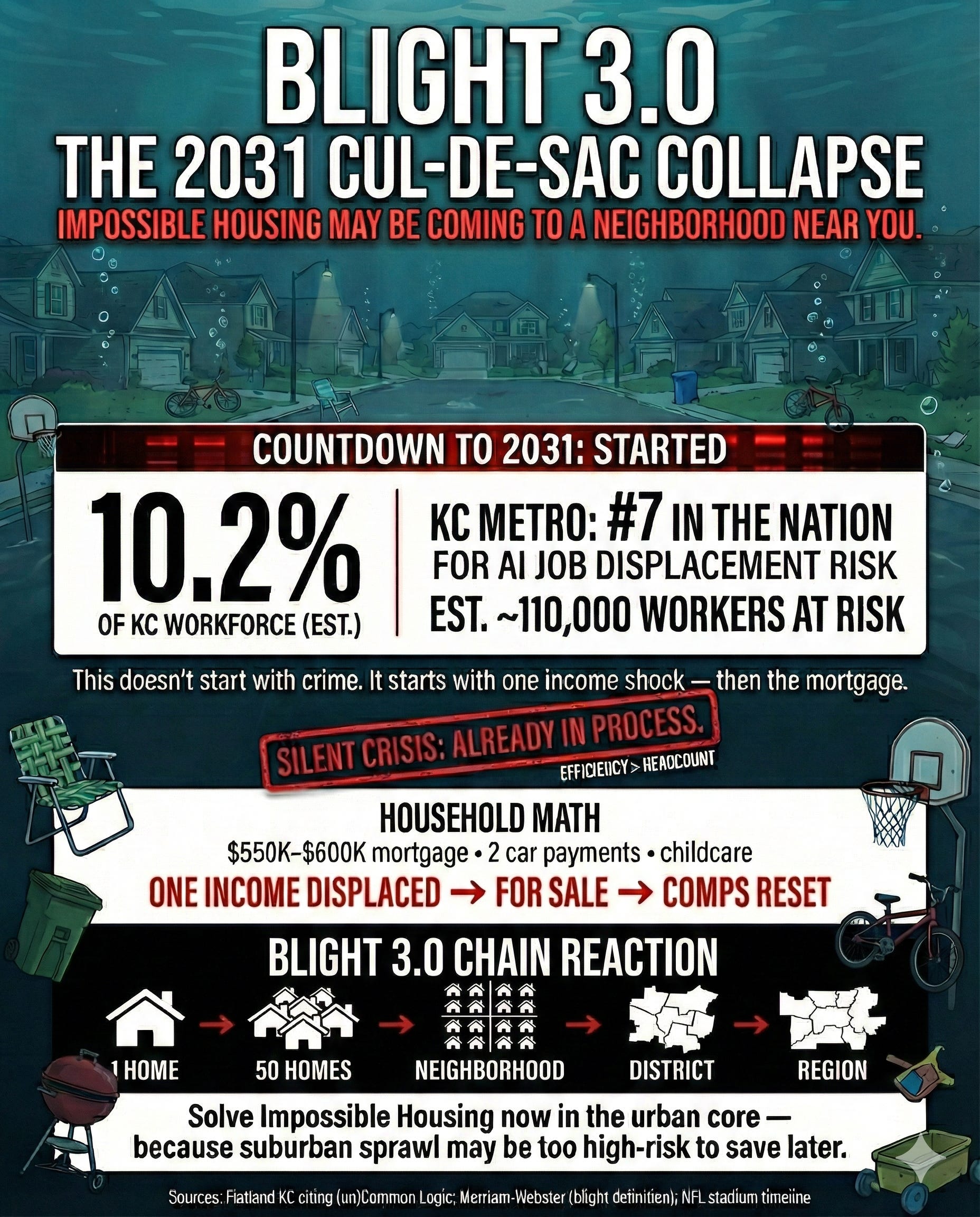
Countdown to 2031: started.
WHAT IS BLIGHT?
Blight is deterioration.
Dilapidation.
Decay. (Merriam-Webster)
It’s easy to think “blight” is only associated with a property, a house, an old building, or an area… like the “urban core / inner city.”
The dictionary commonly calls out “urban blight” because that’s where we’ve been trained to expect it:
Boarded windows. Vacant buildings. Trash filled streets. “Those parts of the city.”
But a place can look “fine” while the blight process is already underway.
Source (definition + “urban blight” usage):
Because blight isn’t a location.
Blight is a process that leads to a state of being.
And in the next era of blight—Blight 3.0—that process doesn’t show up with sirens and gunshots.
Blight 3.0 will show itself on corporate balance sheets, as companies are forced to transition to an AI workforce… or go out of business.
It shows up in:
A missed payment you don’t tell your neighbors about
A “temporary” forbearance that becomes a year
A quiet forced sale that resets the comps
An HOA newsletter that gets more urgent every month
A quiet chain reaction behind closed doors that blindsides comfortable households… and destabilizes entire regions.
SILENT CRISIS: ALREADY IN PROCESS.
Not because households are collapsing already — but because corporations are already choosing efficiency over headcount.
────────────────────────────────────────
────────────────────────────────────────
HOT TAKE #1 of 11 FOR KC METRO
KC METRO IS 7TH HIGHEST IN THE NATION FOR AI JOB DISPLACEMENT.
THE CUL-DE-SACS WILL THE NEW BLIGHT 3.0 HQ.
The cul-de-sac isn’t immune — it’s next, because Impossible Housing spreads fastest where household math is tight.
A metro-by-metro analysis by ((un)Common Logic in 2024.), cited in local reporting by Flatland KC, estimates that 10.2% of the Kansas City area workforce—about 110,000 workers—is at risk of AI-related job displacement, the seventh-highest exposure among large metropolitan areas.
Source:
Read that again.
110,000.
Not “some jobs.”
Not “a sector.”
A slice of an entire region.
WHITE-COLLAR AI TAKEOVER
A deeper dive into the data: AI’s zeros and ones are not coming for our plumbers or your performing artists.
It’s coming for a much more “protected” class of Kansas Citians.
The “industry” of the KC metro is professional services and support:
Lawyers. Accountants. Healthcare. Telecom.
And we already know what’s been happening to major firms pre-AI.
Now set your clock to September 7, 2031.
The Chiefs’ home opener in a shiny new domed stadium to start the 2031 season.
By the time the ribbon gets cut and the cameras pan across “the future,”
THE OLDER ECONOMIC MATH THAT BUILT THE SUBURBS
WILL ALREADY BE UNDER PRESSURE.
NOT BECAUSE THOSE
NEIGHBORHOODS ARE UNDESIRABLE.
BECAUSE THE HOUSEHOLDS ARE UNDERWATER.
The suburbs aren’t fragile because they’re weak.
They’re fragile because the math is tight.
One white-collar family:
A $550,000 mortgage.
Two car payments.
Childcare.
Insurance.
Groceries that don’t stop climbing.
One income is displaced by AI (layoff, cut, consilidation):
Six months later, the savings are gone.
The mortgage becomes the domino
Twelve months later, the forced sale resets comps.
Eighteen months later, the “safe neighborhood” has a new baseline price.
NOW SCALE IT.
If 50 families in one subdivision get hit with layoffs, that’s not “a few bad situations.” That’s a neighborhood devaluation event.
One house loss blights a family. Fifty homes blight a neighborhood. A few neighborhoods blight a district. And a few districts blight a region’s economy.
That’s how blight spreads when it wears a clean white-collar shirt.
────────────────────────────────────────
────────────────────────────────────────
THE PATTERN:
BLIGHT 1.0 → BLIGHT 2.0 → BLIGHT 3.0
If this feels dramatic, it’s because you’re picturing blight as a place you don’t live.
“Not In My Backyard” people are the ones who do not want affordable housing—or even the mention of it—within their community.
I believe they’re the most prone to disruption… and the ones who will need it most when AI’s zeros and ones hit the fan.
I’m describing blight as a pattern any geography can catch.
Kansas City has already lived through two versions of it.
And if you dismiss those as “old history,” you’re training yourself to miss what’s coming next.
────────────────────────────────────────
────────────────────────────────────────
BLIGHT 1.0 — DEVALUATION BY SKIN COLOR (REDLINING)
1906 - 1964
Blight 1.0 wasn’t just discrimination.
It was economic shutdown by design.
Kansas City’s most celebrated development era also entrenched its deepest divides.
Local reporting documents how J.C. Nichols used deed restrictions that excluded Black residents (and others) and helped cement the city’s racial and economic separation. Source Here
And here’s the part most people still miss:
Housing was the face of the redlining movement. Economy was the sinister heart.
From 1932 to 1964 Kansas City used housing production as an economic engine.
In 28 years, KC Metro produced 77,000 homes, $39 Billion in direct housing production and over $1.1 Trillion in ripple economic impact for 28 years.
“less than 1% went to negros as they were deemed high-risk.”
Instead of 77,000 homes, only 770.
Instead of $39 Billion, only $390 Million.
URBAN HOUSING WAS
THE PUBLIC EXCLUSION.
THE SUBURBAN ECONOMY WAS
THE PRIVATE BENEFICIARY.
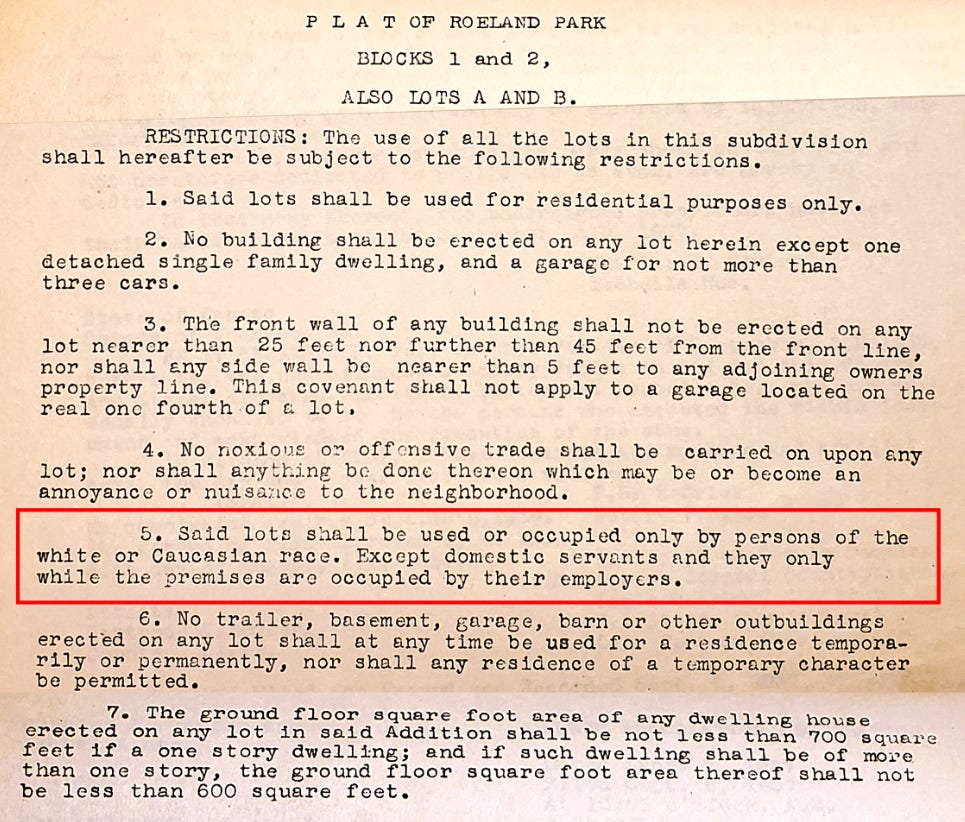
In the wider metro, federal mortgage programs reinforced this structure. Johnson County documentation notes that by 1950, suburban developments there were 96% racially restricted—148 of 154 developments open only to white home buyers. Source: https://www.jocogov.org/joco-magazine/spring-2025/johnson-countys-pioneering-fair-housing-advocates
When housing lost value: • families lost stability • businesses lost customers • services withdrew • jobs moved • tax bases shrank • tax bases moved to strength other communities.
That’s why redlining wasn’t just housing policy.
It was the shutdown of one economy so another economy could compound.
────────────────────────────────────────
────────────────────────────────────────
BLIGHT 2.0 — DEVALUATION BY POLICY (“RISK” WITHOUT SAYING RACE)
1962 → TODAY
Blight 2.0 couldn’t use race written into the rules.
That’s illegal.
But it could rebrand as “risk,” and that’s super legal.
Today, Blight 2.0 uses “risk logic”—underwriting, appraisals, incentives, and policy constraints—to keep defining the same places as high-risk and low-return.
The outcome stayed the same.
New housing production dropped.
The economy followed.
And because the economy can’t reach critical mass, it can’t recover.
“That part of town” stays that part of town.
Blight 2.0 is the secret sauce that keeps the grass greener in other communities.
Blight 2.0 is how the story keeps repeating even after everyone agrees the first chapter was wrong.
────────────────────────────────────────
────────────────────────────────────────
BLIGHT 3.0 — DEVALUATION BY EFFICIENCY (THE WHITE-COLLAR RECESSION)
2026 → BEYOND (IT’S ALREADY SHOWING UP)
We recently had lunch with a friend who worked for a major company that was once headquartered here in Kansas City.
He survived layoff after layoff after layoff over the past seven to ten years.
Not because he was failing.
Because the machine kept getting better.
This is the part that changes everything:
Blight 3.0 doesn’t need to “see color.”
It doesn’t need to draw a line on a map.
It targets ones and zeros.
Lines of code.
Efficiency.
“I DON’T SEE COLOR,” says Blight 3.0.
And that’s why it’s dangerous.
Because when the displacement hits white-collar work, it hits the mortgage base.
And when the mortgage base cracks, it hits everything else.
Kansas City’s own AI displacement estimate isn’t coming from nowhere.
The Flatland KC reporting (citing (un)Common Logic) describes how AI can compress labor needs—“if it took five accountants to handle a particular task, with AI, it’s down to one.”
────────────────────────────────────────
────────────────────────────────────────
AI Is On Track Regardless If You Are Prepared Or Not.
And broader AI forecasting work is explicitly modeling a near-future world where AI systems become dramatically better and cheaper at coding and other knowledge tasks.
Sources (AI Futures Project / AI 2027 scenario + takeoff model):
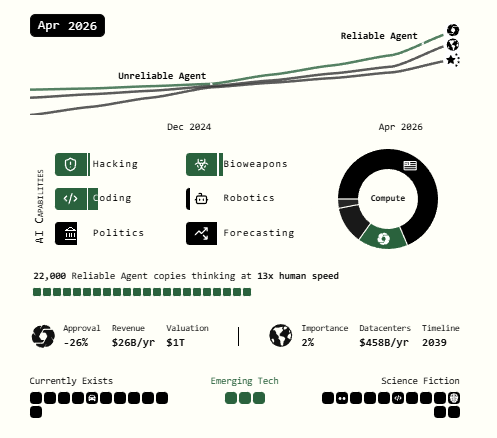
The Change In AI between April 2026 - October 2027 doesn’t just affect coders. It affects us all.
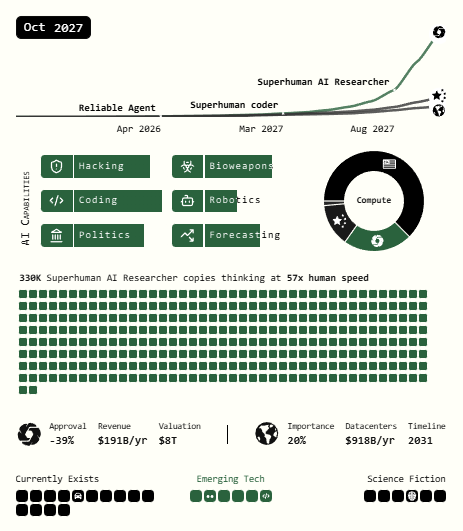
Will it happen exactly on their timeline?
No one can promise that.
But here’s what we can say without guessing:
The direction is already visible.
And the incentive is brutal.
When one AI digital worker can do the output of 50…
When one company can pay $200 a month and get 50 “employees” with no health benefits required…
When a firm can rapidly grow margins with fewer salaries… it will.
And the first place that shows up is the most sensitive balance sheet in America:
the suburban household.
The pattern will be familiar:
Job loss.
Tightened budgets.
Downsizing.
Forced sales.
Comp resets.
Then a neighborhood.
Then a district.
Then a region.
Because housing is the first domino.
The economy is the collapse.
────────────────────────────────────────
────────────────────────────────────────
Solve Impossible Housing now in the urban core — where solutions can still compound.
Because suburban sprawl may be too “high-risk” to save later.
────────────────────────────────────────
────────────────────────────────────────
WHAT COMES NEXT (POST 2)
In the next post, I’m dropping the remaining 10 hot takes.
8 hot takes on what’s coming:
How a “comfortable” cul-de-sac becomes fragile house-by-house—and why this blight will look clean until it’s not.
3 hot takes on what to do now:
How to build income-shock homeownership systems that overpower blight, prove them where people are open to new opportunity (the urban core), and expand outward before suburban optionality disappears.
If you’re waiting for a visible crisis to take this seriously, that’s the point.
Blight 3.0 doesn’t announce itself.